Yandex · Delivery Robot 2.0
Building the interface to monitor and control a toy robot from a phone
- Role
- UX/UI Designer
- Team
- 3 — UX/UI Designers8 — Flutter Developers2 — DevOps2 — QA2 — Project Managers
- Period
- 4 months
- Links
- View liveOpen design
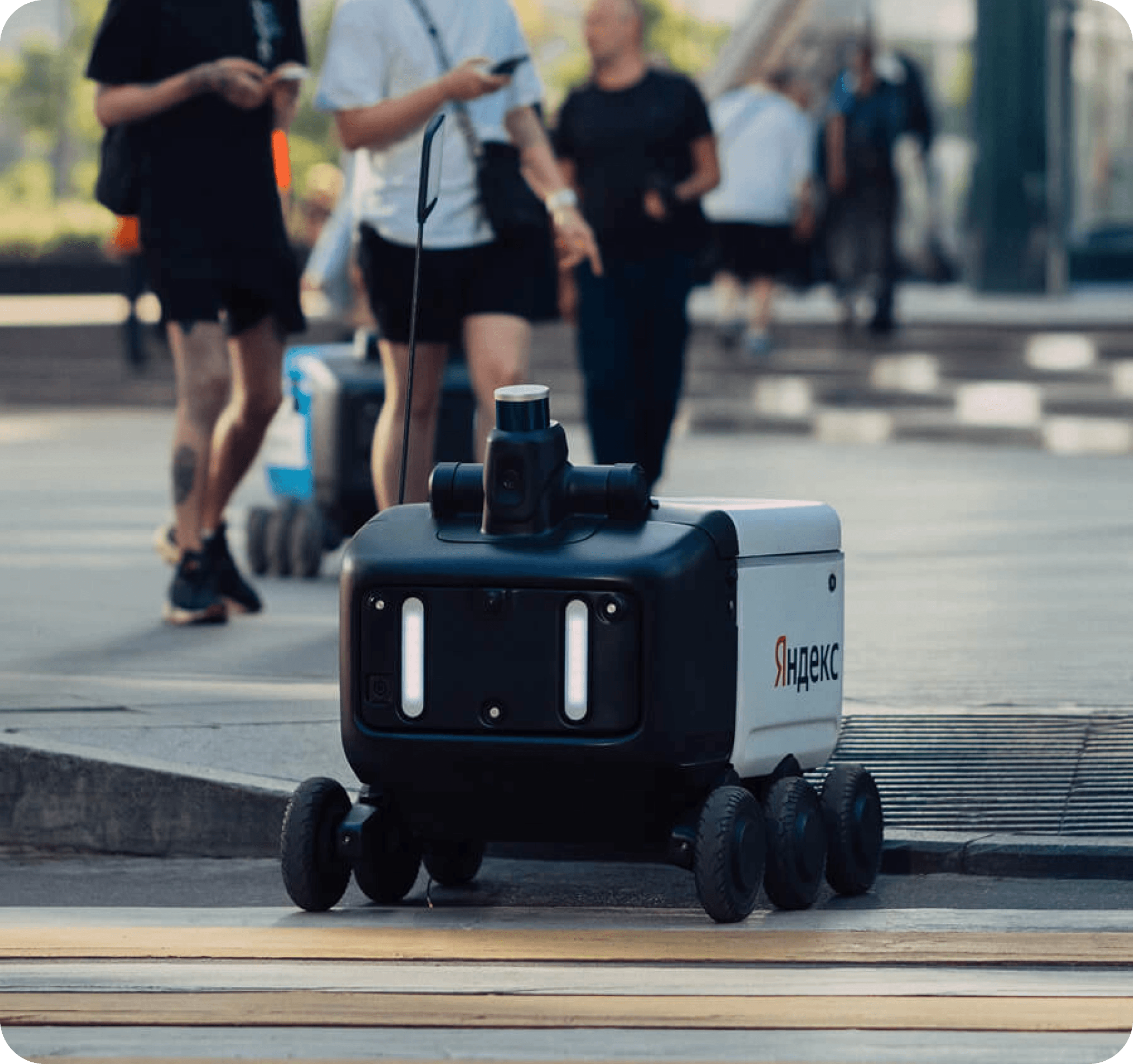
Yandex is one of Russia's largest tech companies, working across a wide range of digital and physical products. The project belonged to its “autonomous transport” division, where the company develops delivery robots that travel along city streets. The delivery robot became a recognizable symbol of Yandex: museums, branded merch, toys and collectibles grew up around it. The robot is treated not only as a technical product, but as part of the company's brand ecosystem.
Goal
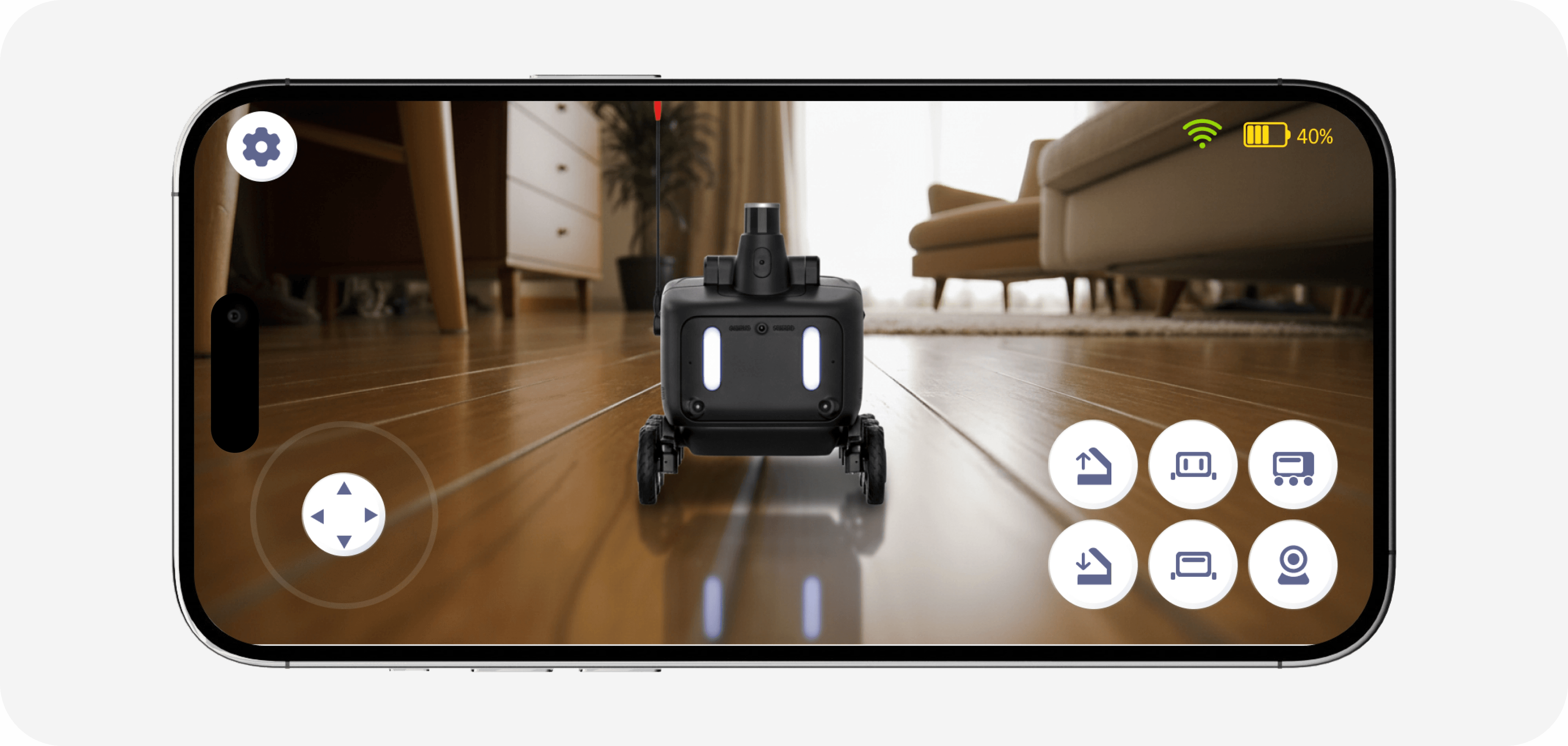
Build a mobile app to control the Delivery Robot 2.0, replacing the physical remote control with a digital interface.
I was responsible for
Control interface, robot pairing on iOS, onboarding, system errors and notifications, store listings for Google Play and the App Store.
About the project
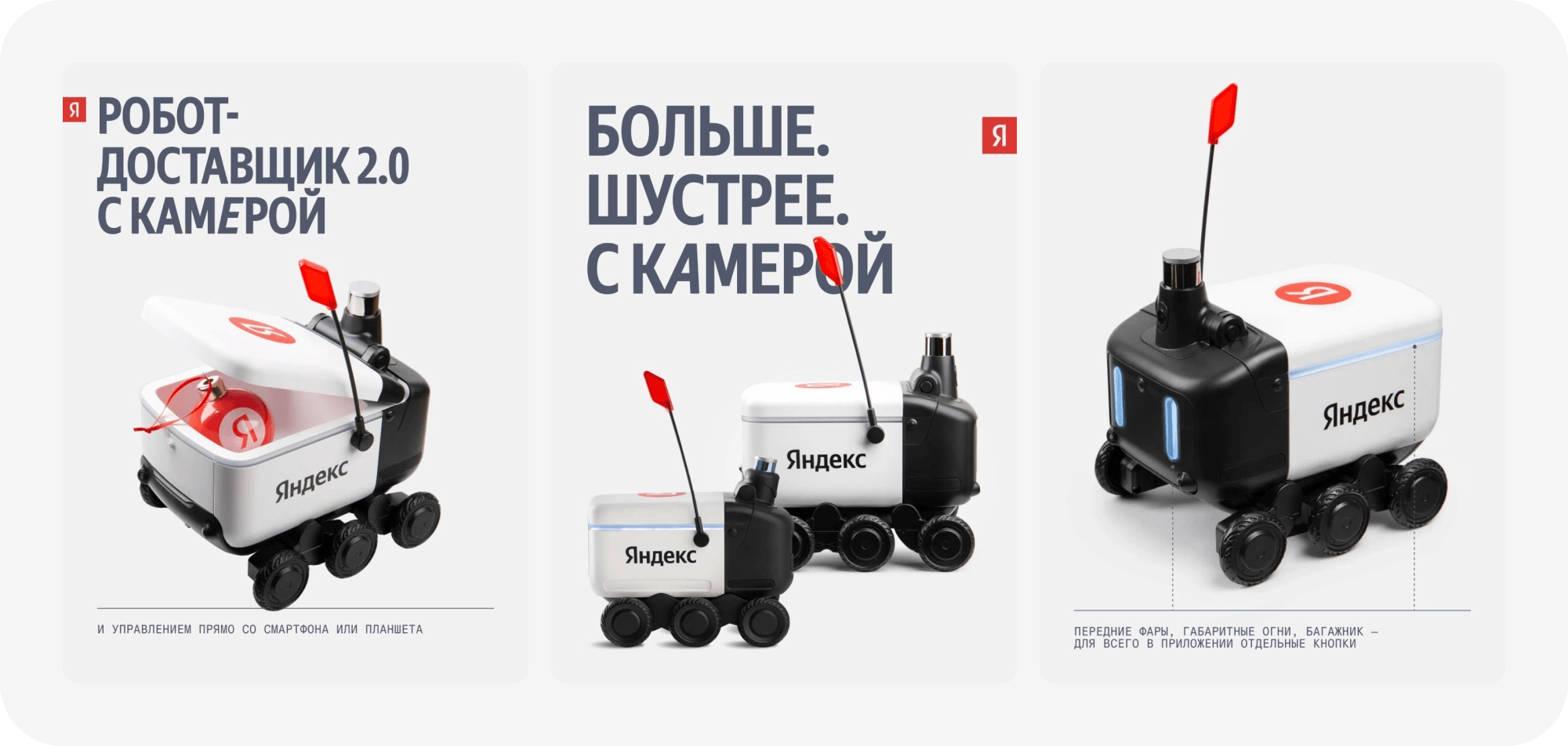
The Delivery Robot 2.0 is a new iteration of the product: more advanced, longer-range and fitted with a camera that streams a live picture. The key change was moving control from a physical remote to a mobile app. The smartphone made for a more flexible and scalable way to interact with the device.
Research
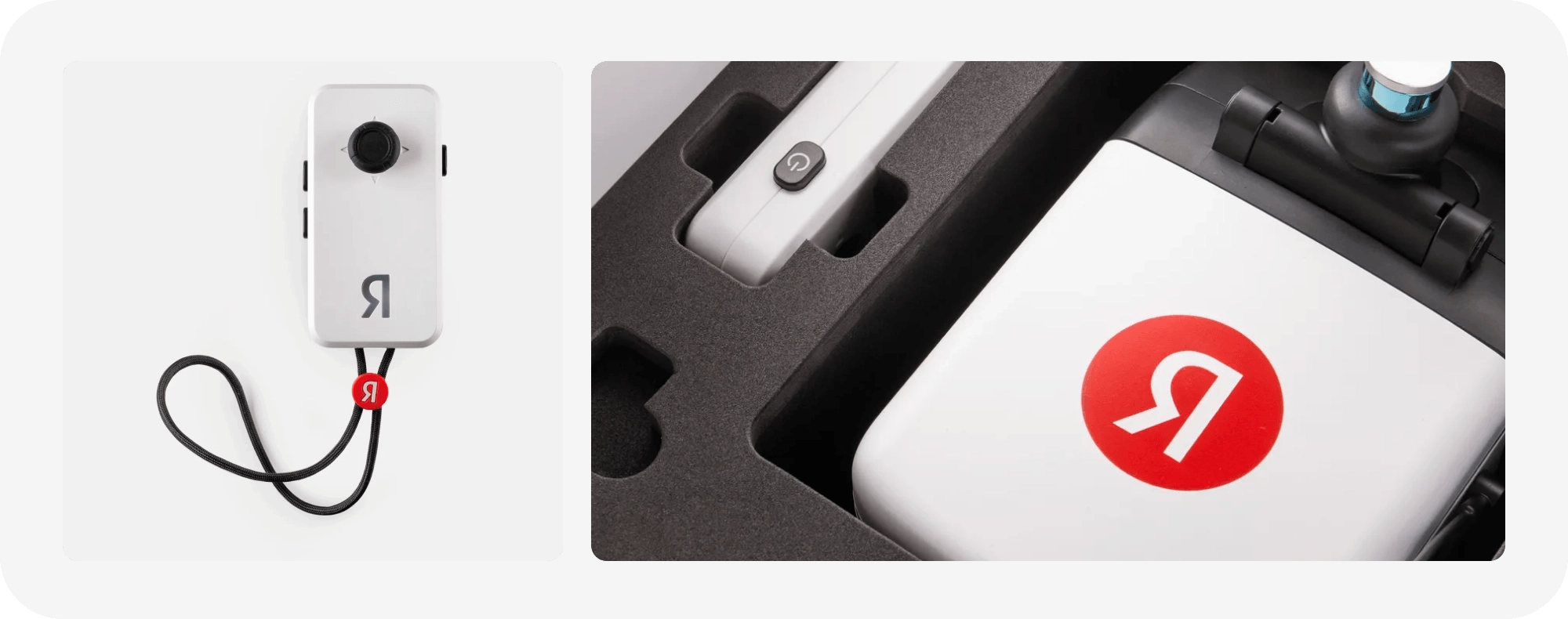
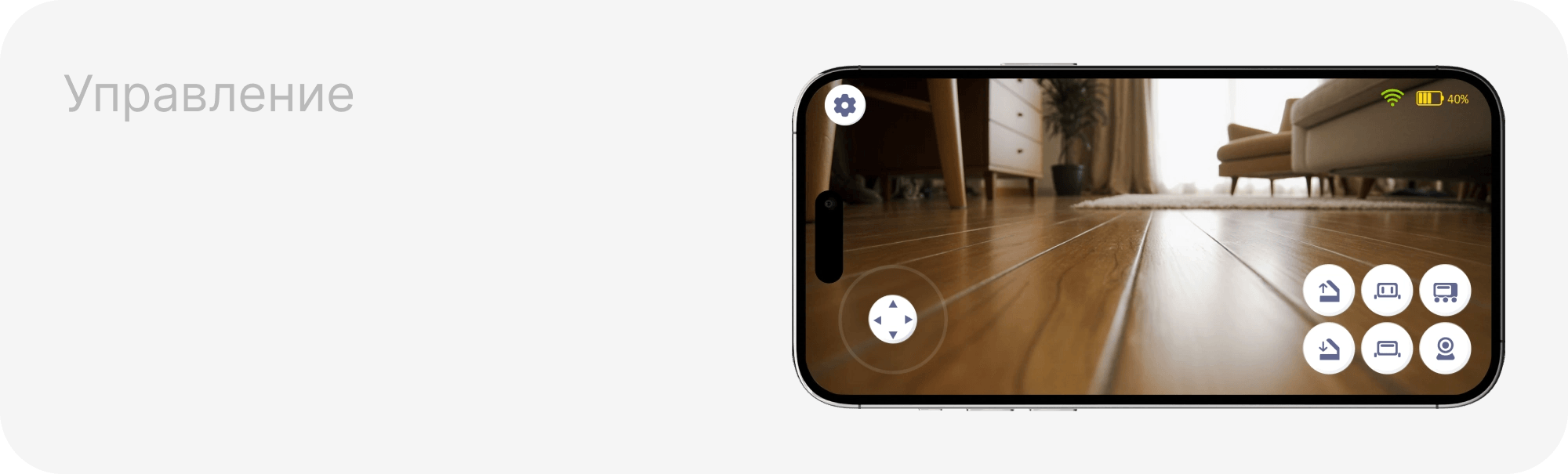
The first step was a detailed study of the first-generation robot: how it looks, how control feels and what users experience and write in reviews. The key idea was born — keep visual continuity between versions 1.0 and 2.0 so they read as a single product line. We decided to mimic “physical” buttons on screen, recreating the feel of the original remote.
Visual research
Work started with studying existing solutions and gathering references. We settled on the key screens: settings, pairing, control. Once the wireframes were ready and approved by the team, we moved on to visual design. We considered both portrait and landscape orientation, but after mapping the touchpoints we concluded that portrait was less convenient — users would have to keep rotating the phone between the control and settings screens.
UI kit
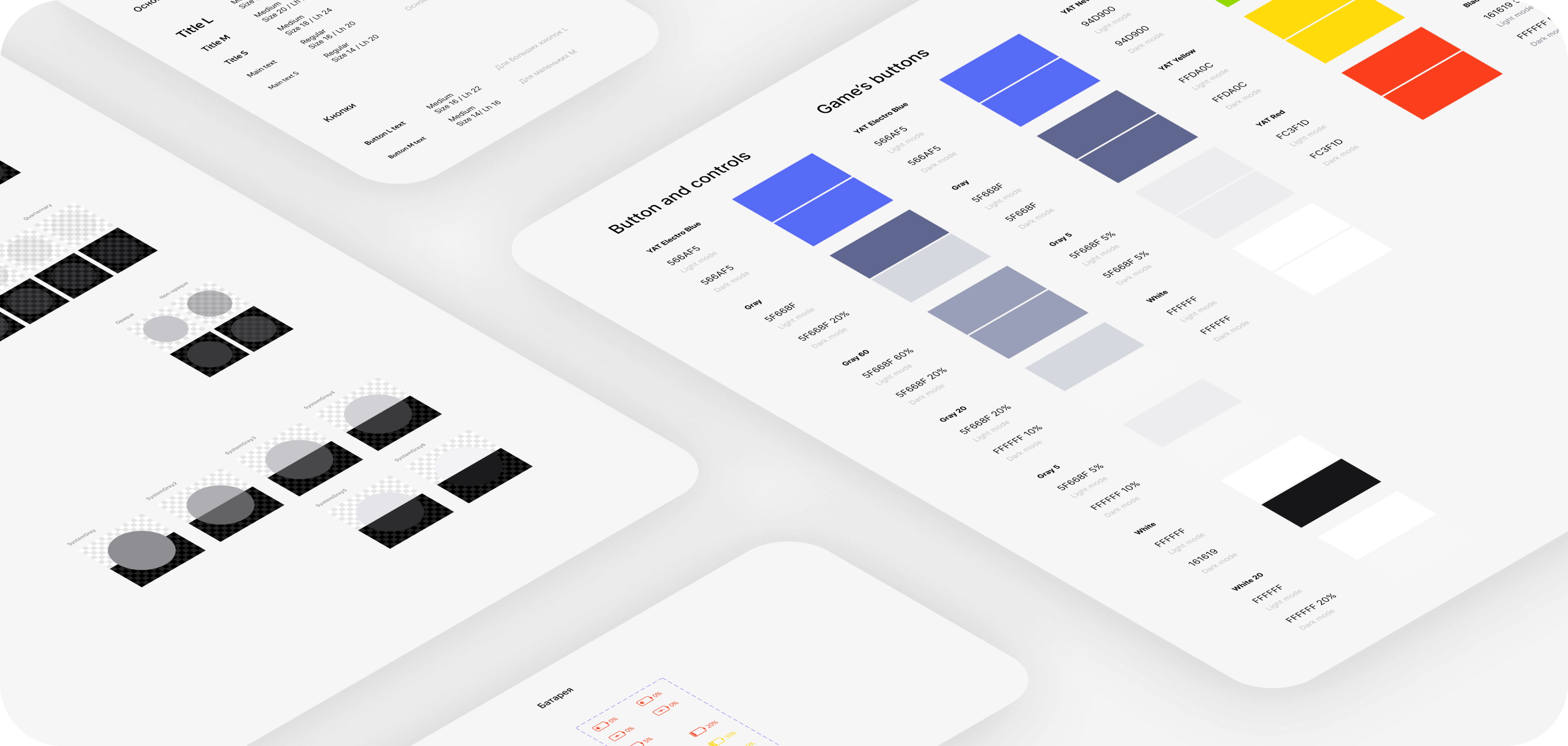
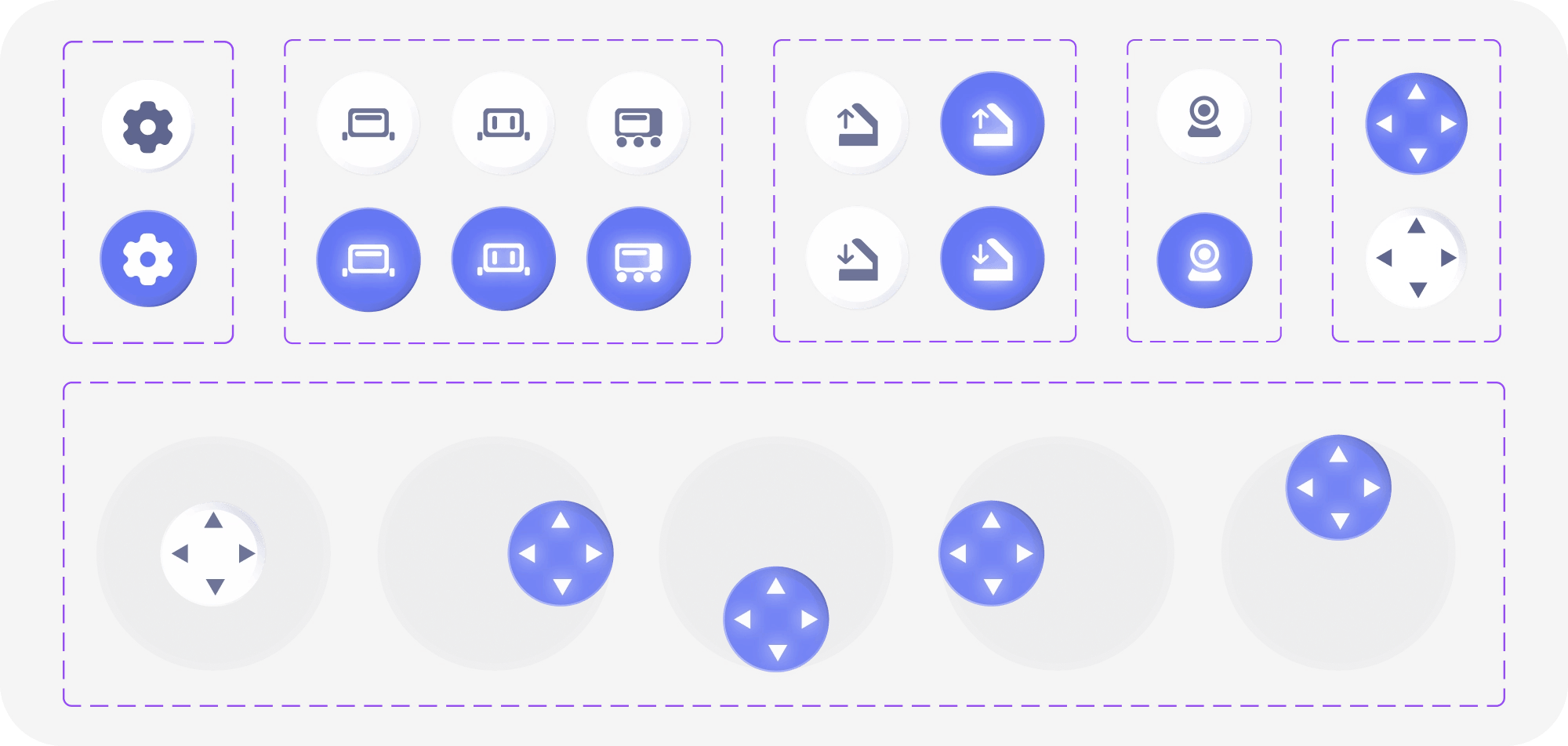
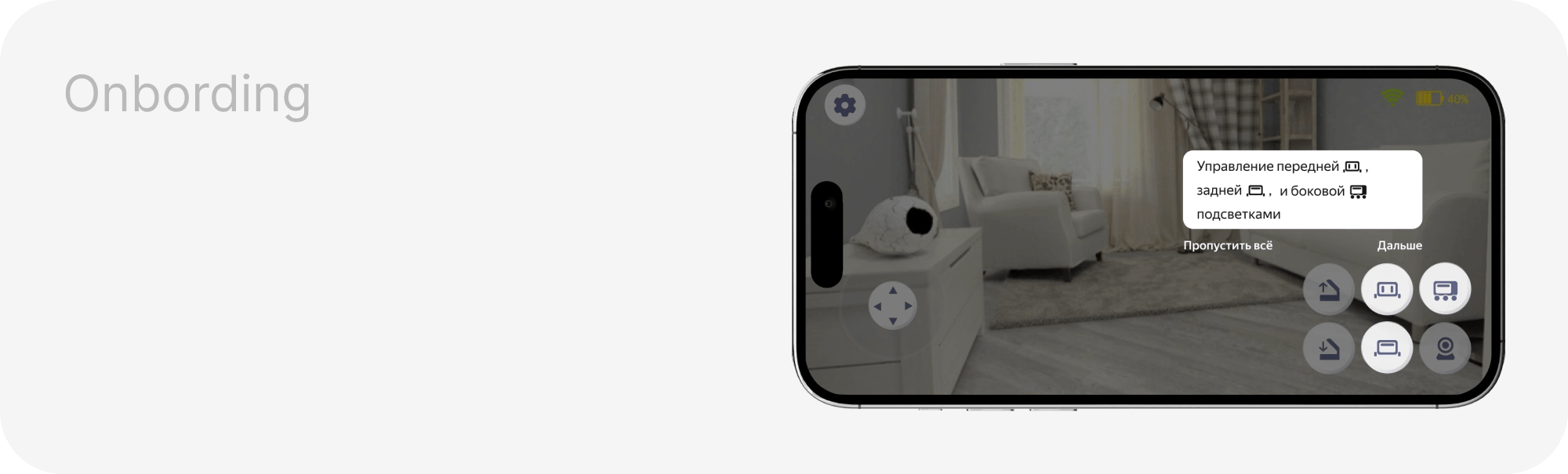
One of the main challenges was having no access to Yandex's design system. It took time to build our own UI kit based on the “Autonomous Transport” colors. I owned the visual style of the elements on the Control, Onboarding and Notifications/Errors screens, and designed a brand-new set of icons for controlling the robot's lighting.

Final design
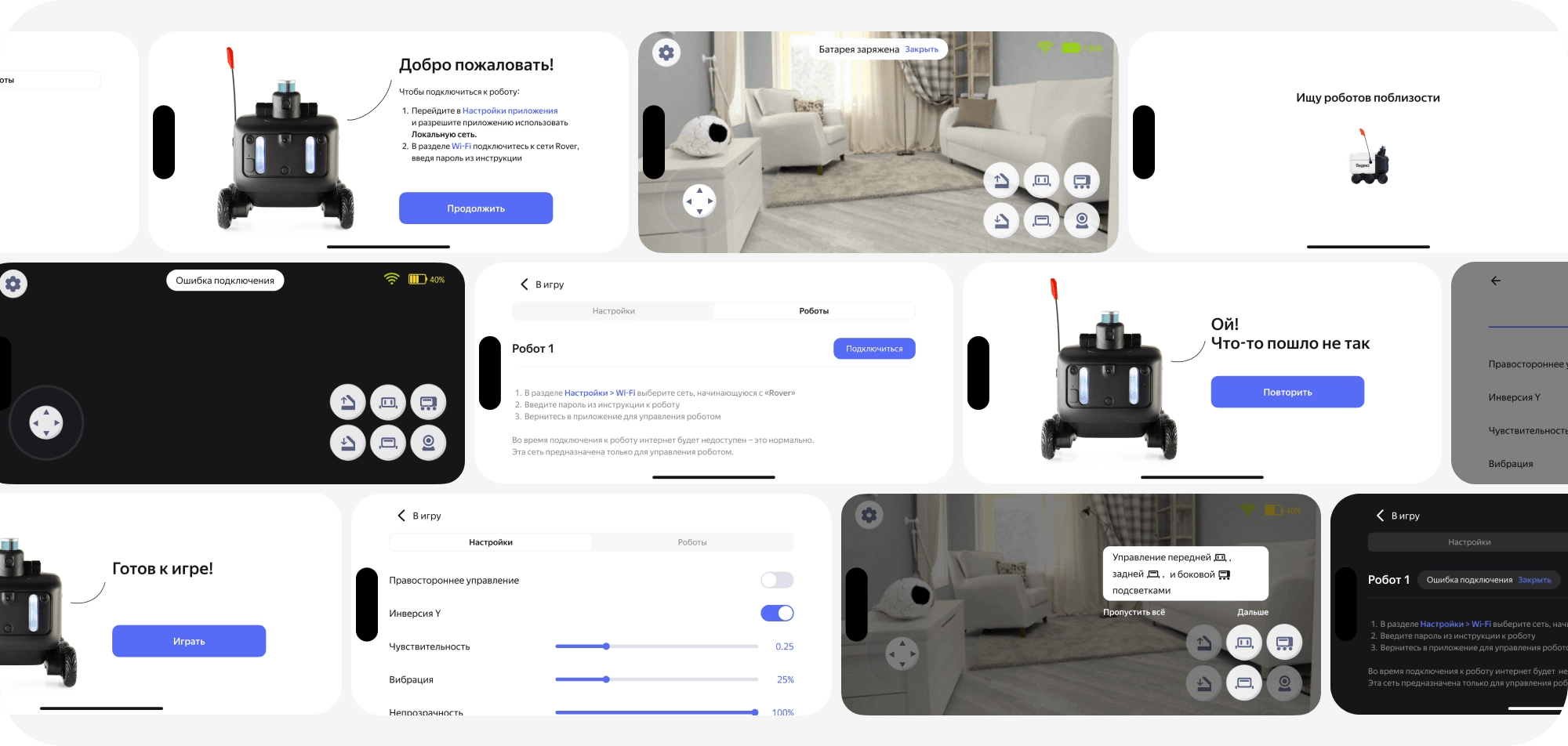
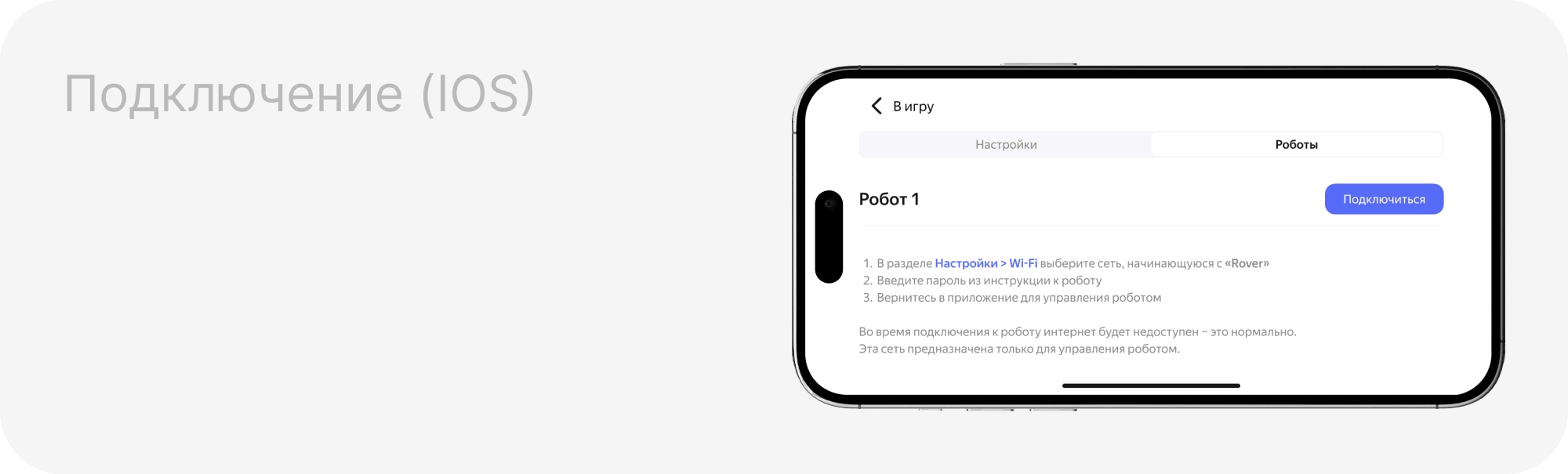
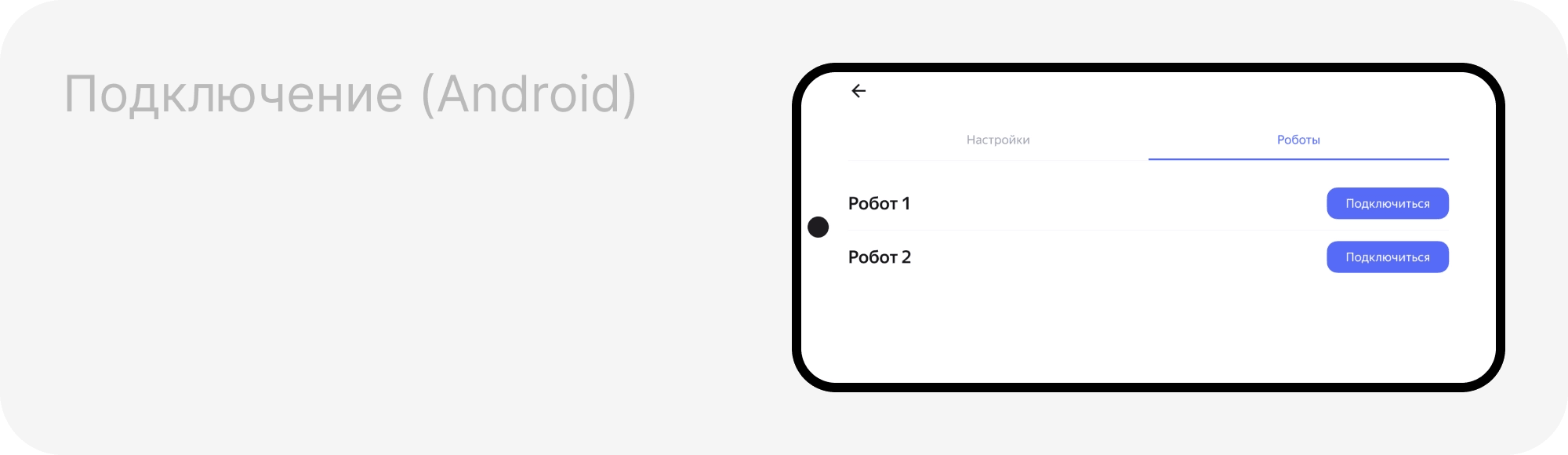
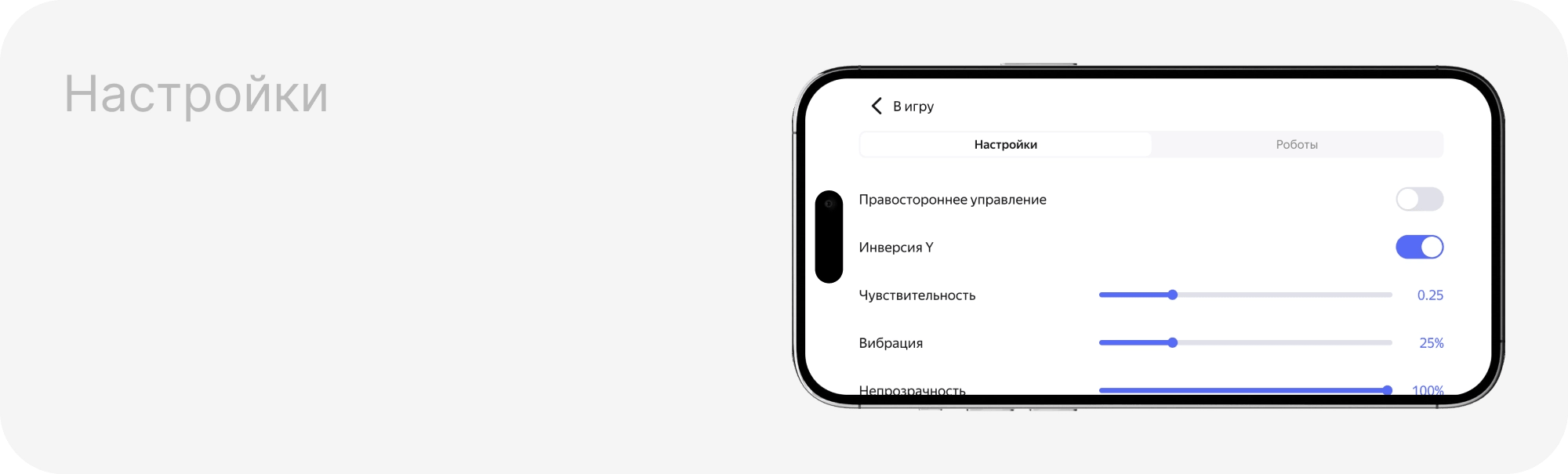
Despite the cross-platform stack (Flutter), platform constraints forced us to split the design. The differences are minor, but they exist in the robot-pairing flow. It mattered not only to respect each platform's specifics, but also to keep information fully legible against a dynamic background.
More flows
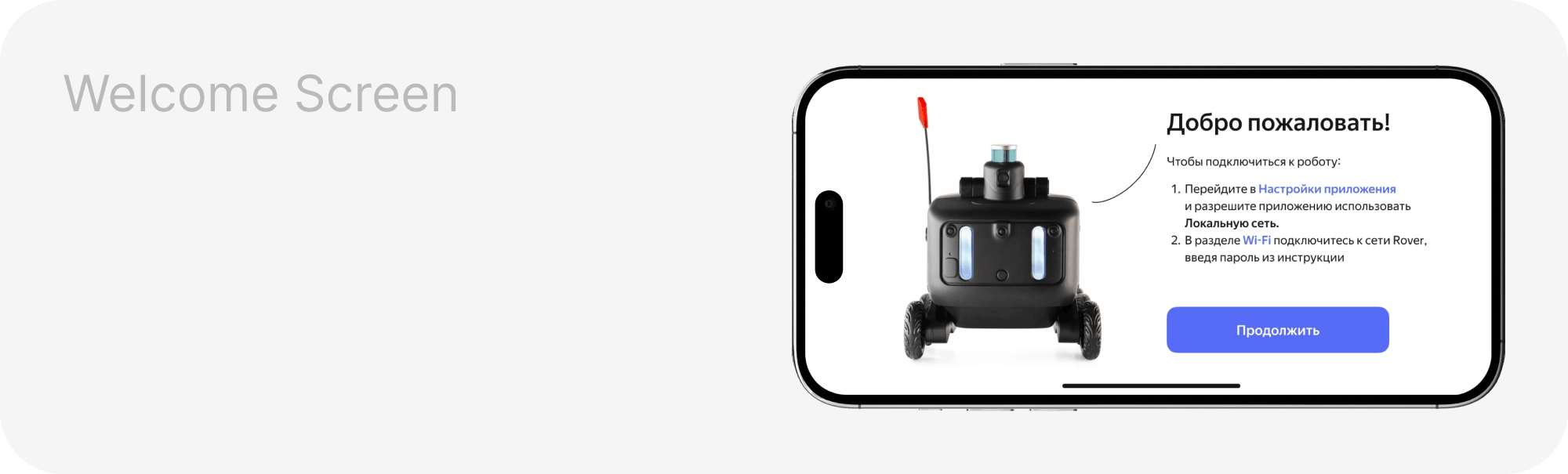
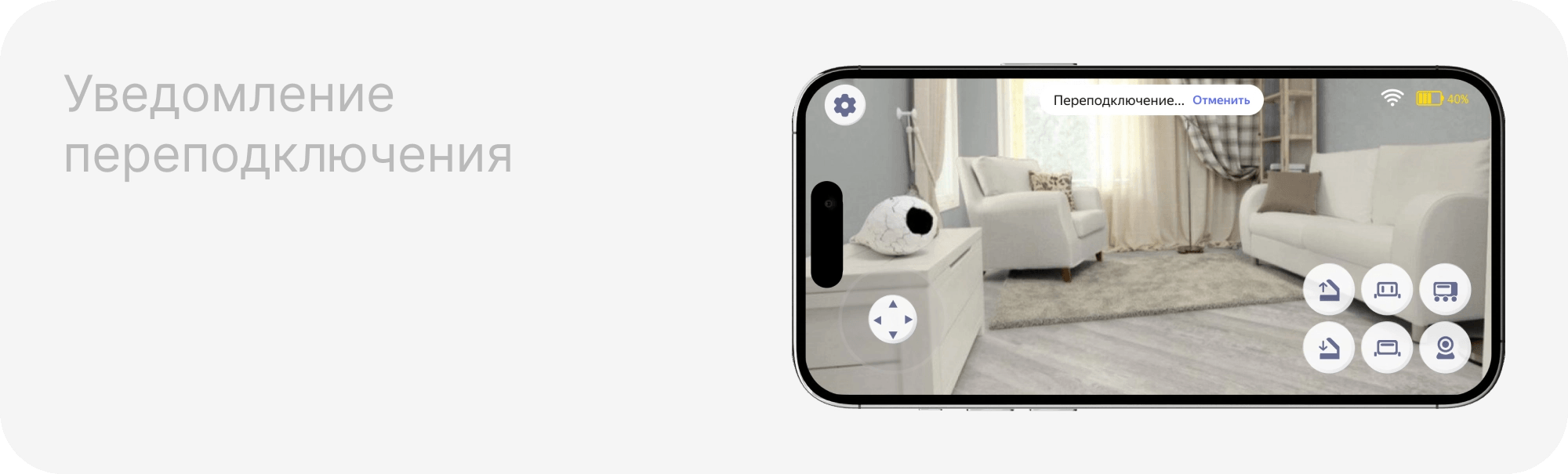
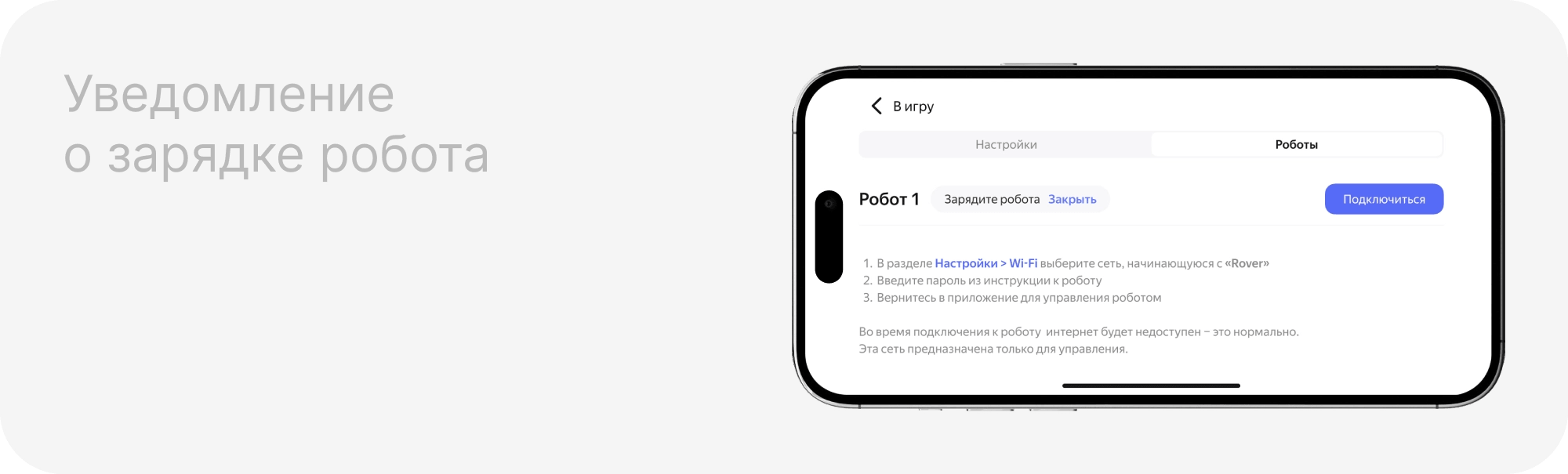
I was responsible for building interactive prototypes for the developers, as well as every error and notification scenario — so the user always understands what is happening and stays in full control.
Results
Before launch I prepared the store listings for Google Play and the App Store. Within a month — over 1,000 installs on Google Play and over 10,000 on the App Store. Sales of the physical delivery-robot toy launched on major marketplaces: Ozon, Wildberries and Yandex Market.